Showing posts with label assurance of salvation. Show all posts

Tuesday, June 2, 2026

APOLOGETICS BIBLE STUDY Q&A: "Hebrews 6 at 10: "Once Saved, Always Saved" ba talaga?"


APOLOGETICS BIBLE STUDY Q&A: "Hebrews 6 at 10: 'Once Saved, Always Saved' ba talaga?" 

Let’s get real. Sa maraming Christian circles dito sa Pinas, medyo "taboo" topic ang usaping ito. Minsan, kapag tinanong mo, "Pastor, puwede bang mawala ang salvation?", ang sagot agad ay "Once saved, always saved!" Pero kapag binasa mo nang maigi ang Book of Hebrews, parang hindi naman ganoon kasimple ang sinasabi.

Maraming "warning passages" sa Hebrews yung mga verses na nakakatakot basahin (like Hebrews 6 at 10). Are these just warnings for "fake" Christians? Or are they genuine warnings for us?

Let's break this down. Bilang Reformed Arminians, naniniwala tayo sa sovereignty ng Diyos sa salvation, pero naniniwala rin tayo na may "real human freedom" tayo para mag-respond sa grace, not in a heretical Pelagian sense, at totoo ring posibleng itakwil ang grace na 'yun. Let’s dive into the Word.

1. Ang Context: Sino ba ang kinakausap ng author?

Hindi natin puwedeng i-apply ang Hebrews sa buhay natin kung hindi natin naiintindihan ang audience nito. Ang Book of Hebrews ay isinulat para sa mga Jewish Christians na nasa ilalim ng matinding pressure noong mga 60–70 A.D.

Isipin mo ang sitwasyon nila: tinanggap nila si Jesus bilang Messiah, pero dahil sa Roman persecution at social pressure, na-tempt silang bumalik sa Old Covenant (Judaism). Bakit? Kasi mas safe sila sa synagogue at hindi sila tutugisin ng Rome.

The warning wasn’t about struggling with sin (like getting angry or failing). The warning was about a total, deliberate, public turning away from Christ. They were literally considering "crucifying Christ all over again" by returning to the old system of animal sacrifices.

2. Hebrews 6:4–6: Are they "Fake Christians"?

Basahin natin ang mahirap na verse na ito: "For it is impossible, in the case of those who have once been enlightened, who have tasted the heavenly gift, and have shared in the Holy Spirit... and then have fallen away, to restore them again to repentance..."

Q: Sabi ng iba, "Fake Christian" lang daw 'yan kaya sila nahulog. Tama ba?

A: Ang hirap sabihin na "fake" sila, kapatid. Look at the language used:
  • "Enlightened" (phōtisthéntas): Sa early church, ito ang term para sa baptism at conversion.

  • "Shared in the Holy Spirit" (metochos): Ito yung mismong word na ginamit din sa Hebrews 3:14 para sa mga genuine believers!

    "Sapagka't tayo'y nagiging kabahagi (metochos) ni Cristo, kung ating iniingatang matibay ang pasimula ng ating pagkakatiwala hanggang sa katapusan." (Heb 3:14 Tagalog AB)
  • "Tasted the heavenly gift": If you "taste" something, it's real.

    Minsan, may mga taong gustong i-defend ang ideya na "once saved, always saved," kaya sinasabi nila na ang mga taong "tasted the heavenly gift" sa Hebrews 6 ay mga taong nakatikim lang pero hindi naman talaga nakalunok o hindi talaga na-save. Pero sa totoo lang, napakahina ng argument na 'yan kung titingnan natin ang bigat ng mga salitang ginamit ng author.

    Think about it:
    Ang salitang "tasted" (o geuo sa Greek) ay hindi nangangahulugan ng isang superficial o pampalipas-oras na karanasan. Sa Hebrews 2:9, ginamit ang mismong salitang ito para ilarawan ang ginawa ni Kristo:

    "He might taste death for everyone."


    Tanong: Totoo bang namatay si Kristo? Siyempre, oo! Full and real experience ang kamatayan ni Kristo. Hindi lang Siya "tumikim" ng kamatayan; Siya ay dumaan sa totoong kamatayan. Kung gagamitin natin ang lohikang ito, ang pag-“taste” sa heavenly gift ay nangangahulugan ng isang totoong pagdanas sa biyaya ng kaligtasan. Ito ay pagtanggap sa justification, sa presensya ng Espiritu, at sa totoong buhay na galing sa langit. Hindi ito parang "free taste" sa mall na dumaan lang sa dila mo at lumipas din agad. Ito ay isang tunay at buhay na karanasan ng isang taong iniligtas ng Panginoon.
The author of Hebrews uses strong words. Hindi niya sinabing "parang na-enlighten." Sabi niya, na-enlighten sila. From a Reformed Arminian perspective, ang point ng author ay hindi "hypothetical" (na kunwari mawawala). He is giving a genuine warning because apostasy is a genuine possibility.

  • At higit sa lahat ay napakahirap sabihin na "fake" lang sila, kapatid, lalo na kung babasahin natin nang malalim ang orihinal na konteksto ng Hebrews 6:4–6. Pagdating sa phrase na "to restore them again to repentance," ang implikasyon nito ay napakalinaw: ang kanilang unang pagsisisi (repentance) ay totoo at genuine. 

    Isipin mo ito: hindi mo naman puwedeng "i-restore" o ibalik ang isang bagay sa dating state nito kung hindi naman talaga ito nag-exist sa simula pa lang. Kung "fake" lang sila, ibig sabihin ay wala silang tunay na repentance na magsisimula, kaya wala ring maibabalik.

    Ang katotohanang sinasabi ng author na
    "impossible to restore them again to repentance" ay nagpapatunay na ang kanilang unang paglapit sa Panginoon ay hindi pakitang-tao; ito ay isang tunay na pagtugon sa biyaya ng Diyos.

3. Hebrews 10:26–29: "Sanctified" ba talaga sila?

May isa pang verse na nakaka-stress para sa mga OSAS believers:

"How much worse punishment, do you think, will be deserved by the one who has trampled underfoot the Son of God, and has profaned the blood of the covenant by which he was sanctified, and has outraged the Spirit of grace?" Hebrews 10:29(ESV)

Q: Kung "sanctified" (pinabanal) siya by the blood, hindi ba saved na siya?

A: Exactly. That’s the point. The person who falls away was actually set apart by the blood of Christ.

Sa New Covenant Theology, ang warning ay hindi para sa mga taong hindi pa nakakakilala sa Diyos. It is for those who are inside the Covenant. Para itong "covenant breaker." Sa Old Testament, kapag ang Israelite ay lumabag sa covenant, may consequence. Sa New Covenant, mas malala ang consequence kasi mas maganda at mas mataas ang promise na tinanggihan nila.

Hindi ito nawawala dahil sa kaunting pagkakamali. It is a deliberate, final, and apostate rejection of the Savior.

4. So, paano na ang Security natin?

Dito tayo nagkakaroon ng linaw sa Reformed Arminian view. Hindi ibig sabihin nito na "nawawala-babalik" ang salvation mo araw-araw.

1) Assurance is Real: Kung ikaw ay nagtitiwala kay Kristo, lumalakad sa Spirit, at persevering in faith, you have every reason to be assured. Ang assurance ay nasa katapatan ng Diyos at sa ginawa ni Kristo.

2) Warnings are Gracious: Huwag mong isipin na ang warning ay para takutin ka at iiwanan ka ng Diyos. The warnings are the means God uses to keep us close to Him. Para itong guardrail sa highway; hindi mo kailangang sumabit, pero kailangan mo yung guardrail para manatili kang ligtas.

3) High Priestly Intercession: Hebrews 7:25 says He lives to make intercession for us. Hangga’t lumalapit ka sa Kanya, you are safe. Ang panganib lang ay kung ikaw mismo ang tumalikod at ayaw mo nang lumapit.

Real Talk Reflection

Verse: Hebrews 3:14

"For we have come to share in Christ, if indeed we hold our original confidence firm to the end."

Call to Action: Kapatid, huwag kang mag-alala kung ikaw ay nagkakamali, nagkakasala, o nanghihina. Ang "falling away" na tinutukoy ng Hebrews ay hindi yung pagkakatisod (stumbling). Ang tinutukoy nito ay ang pagtalikod (turning away/rejection/apostasy).

Today, kung ramdam mong lumalayo ka, stop. Don't harden your heart. Ang grace ng Diyos ay sapat para itayo ka muli. Ang warning na ito ay hindi para mawala ang peace mo, kundi para patibayin ang faith mo. Keep your eyes on Jesus, the High Priest who intercedes for you. 'Wag mong bitawan ang hawak ng Diyos sa iyo, dahil hawak ka Niya.

Let's finish the race together. Amen?

Did you find this study helpful? Feel free to share this post and let's keep the conversation going in the comments below!

Wednesday, April 22, 2026

APOLOGETICS BIBLE STUDY Q&A : Pastor Ronald, ang tanong ko: Totoo bang Faith lang ang basihan ng kaligtasan, at ano po ba ang tamang kahulugan ng Faith?


Q:"Pastor, gusto ko lang po mag-clarify. Ang 'true faith' ba ang pundasyon ng aking kaligtasan? Maaari niyo rin po bang ipaliwanag kung ano talaga ang 'faith'? Tila nalilito po kasi ako sa tunay na ibig sabihin nito."

Tanong #1: Pastor Ronald, true faith po ba talaga ang basihan ng aking kaligtasan?

Sagot: Actually, we need to be very careful sa word na "basis." If we say faith is the basis (ang pinaka-pundasyon), baka isipin natin na ang faith ay isang "work" o merit na kailangan nating i-produce para i-save tayo ni God.

From a Reformed Arminian perspective, the meritorious basis of our salvation is Christ alone. Kanya lang ang credit. Ang faith ay hindi yung "payment" natin sa langit. Ang faith ay ang instrumental cause o yung "kamay" na tumatanggap ng libreng regalo ng Diyos.

Isipin mo 'to: Kung may nag-abot sa iyo ng 1 million pesos (gratis!), yung pag-abot ng kamay mo para kunin yung pera, yun ba ang dahilan kung bakit ka naging milyonaryo? Hindi! Ang dahilan ay yung generosity ng nagbigay. Faith is just you saying "Yes, Lord, I need You" to His grace.


Tanong #2: Ipaliwanag mo po sa akin ang salitang "Faith." Ano po ba ang tamang kahulugan nito? Parang may mali kasi sa pagkakaintindi ko.

Sagot: I feel you! Marami kasi sa atin, ang akala sa faith ay "positive thinking" o kaya "feeling na sigurado." Pero sa Bible, ang faith (Greek: Pistis) ay hindi lang basta emotion. To understand it better, experts often break it down into three parts:

  1. Notitia (Knowledge): You have to know the facts. Hindi pwedeng "blind faith." You need to know who Jesus is and what He did.

  2. Assensus (Agreement): Naniniwala ka na totoo yung facts na 'yun. You agree that Jesus is the Savior.

  3. Fiducia (Trust/Reliance): Ito yung "missing piece" sa marami. Faith is personal trust.

Parang ganito 'yan: Alam mong matibay yung upuan (Knowledge). Naniniwala ka na kaya ka nitong buhatin (Agreement). Pero magkakaroon lang ng "faith" sa upuan kapag umupo ka na talaga at binitawan ang bigat mo rito (Trust).

Ang mali madalas is we think faith is about how much we believe. Pero the power of faith isn't in the "believer," it's in the Object of faith: si Jesus. Kahit maliit na pananampalataya, kung nakakapit sa dambuhalang Tagapagligtas, sapat 'yun.

You know, let's be real minsan nakaka-pressure 'yung "True Faith" discourse. Para tayong laging nagche-check ng "faith meter" natin. "Lord, true faith na ba 'to or baka fake news lang 'tong nararamdaman ko?"

But here’s the thing about the New Covenant: It’s not about how perfectly you hold onto God, but how perfectly He holds onto you. If you’re worried na "may mali" sa faith mo, that’s actually a good sign! It means you’re not trusting in your own "goodness" or your own "spirituality." You’re realizing na you need help.

Faith is just a beggar telling another beggar where to find bread. Don't focus on your faith; focus on the Bread of Life. Stop looking inward at your "feelings" and start looking outward at the Cross.

"For by grace you have been saved through faith. And this is not your own doing; it is the gift of God, not a result of works, so that no one may boast." Ephesians 2:8-9

Call to Action: Ngayong araw, instead of asking "Gaano ba kalakas ang faith ko?", try praying this: "Lord, salamat po na kahit mahina ang kapit ko, mahigpit ang hawak Mo sa akin. I trust You today." Try it. Just one minute of pure reliance. How does that change your peace of mind?

Tuesday, November 25, 2025

Adventist Minds in Conflict: The Great Controversy Today

Mga kapatid, I write this with love, gentleness, and deep respect. Many of us came from the same pews, the same Sabbath school rooms, the same potlucks. We were shaped by the same teachings, the same culture, the same strong desire to “be faithful.”

But as Former Adventists, we also carry this burden: to speak honestly about the conflict many Adventists quietly carry inside the struggle between striving for salvation and resting in Christ.

Today, let’s talk about something very close to the Adventist heart:

Does keeping the Sabbath give assurance of salvation?

Many believe—whether openly or silently—that yes, it does. But Scripture lovingly says otherwise.

The Hidden Pressure Every SDA Feels

If you grew up Adventist, you know the feeling:

  • “Am I ready for Jesus to come?”

  • “Have I kept the Sabbath properly?”

  • “Did I obey the Ten Commandments this week?”

  • “What if I fail the final test?”

This internal “checklist spirituality” is very common. It’s the unspoken culture. Adventists are taught that in the last days, the Sabbath is the “seal of God,” and that those who do not keep it will receive the “mark of the beast.” Naturally, this creates fear. Anxiety. Pressure. And for many, no assurance. But the Bible teaches something radically different.

The Bible Never Says the Sabbath Gives Assurance of Salvation

Let’s say this plainly and lovingly:

  • No verse in Scripture says Sabbath keeping saves a person.
  • No verse says assurance comes from law-keeping.
  • No verse says the final test of salvation is a day of worship.

Instead, the Bible teaches:

• We are saved “by grace… through faith… not of works” (Ephesians 2:8–9).

Sabbath keeping is work. An obedience. A practice. Beautiful, yes. But not a basis for salvation.

• “We have peace with God through our Lord Jesus Christ” (Romans 5:1).

Peace comes from Christ. Not the Sabbath. Not the Ten Commandments. Not obedience.

• Jesus Himself is our Sabbath rest (Hebrews 4:9–10).

The “rest” that saves us is a Person, not a day.

The Assurance the Adventist System Cannot Give

The Adventist framework teaches conditional salvation:

  • You are saved as long as you obey.

  • You are accepted as long as you overcome.

  • You are safe as long as you remain sinless “through Christ’s power.”

  • You are secure as long as you keep the Sabbath faithfully.

This is not an assurance. This is probation. And deep inside, many Adventists know it. But assurance in the Bible is not conditional like this.

True Assurance Is Found in Christ Alone

Here’s the beautiful truth, kapatid:

Assurance is not: “I kept the Sabbath.”

Assurance is: “Jesus kept righteousness for me.”

Assurance is not: “I obeyed the Ten Commandments.”

Assurance is: “Christ fulfilled the law perfectly.” (Romans 10:4)

Assurance is not: “I did my part.”

Assurance is: “It is finished.” (John 19:30)

Sabbath keeping may be meaningful as a tradition, a rest, a reminder. But it will never give peace with God. Only Christ can do that.

Why This Matters So Much Today

Adventists love talking about the “great controversy.” But the greatest controversy today is this:

Is my hope in Christ’s finished work…

Or in my obedience to the law?

Even the Pharisees obeyed the law strictly. But they missed the Savior standing in front of them. Paul warned the Galatians about this very danger:

“Are you so foolish? Having begun in the Spirit, are you now being made perfect by the flesh?” Galatians 3:3

Sabbath is not the issue. The gospel is.

Dear Adventist Friend, Please Hear This with Love

You are not saved because you rest on Saturday.
You are not saved because you avoid pork.
You are not saved because you returned the tithe faithfully.
You are not saved because you kept the Ten Commandments better than others.

You are saved because:

Jesus Christ died, was buried, and rose again for you. 1 Corinthians 15:1–4

The Adventist church often says, “We don’t believe in works salvation.” But culturally and practically, many feel they must earn God’s approval.

This is the conflict.
This is the burden.
This is why so many Adventists secretly feel insecure about salvation.

But Jesus offers something Adventism cannot:

Complete security.
Complete forgiveness.
Complete rest.

A Gentle Invitation

Kapatid, if you feel tired from trying to be “good enough”…
If you feel anxious every time the word “judgment” is mentioned…
If you feel pressured to prove your faithfulness by Sabbath keeping…

Please know:

Jesus is enough.

Jesus is your assurance.
Jesus is your rest.
Jesus is your salvation.

Not Sabbath.
Not obedience.
Not performance.
Just Jesus.

Thursday, November 20, 2025

The 1844 Investigative Judgment:Why this teaching is anti-Gospel?


Since 2021, the Investigating Adventism program of the FAP Ministry has been consistently addressing this crucial issue. Through the ongoing exposure of false teachings, many members of the SDA denomination have already been awakened and have eventually decided to separate from their church. For this reason, FAP Ministry sincerely gives thanks to the Lord for His unending guidance and for using our ministry as an instrument from the beginning until now. At this point, we will employ the Question-and-Answer method of study so that the subject may become clearer and easier to understand.

For many Seventh-day Adventist (SDA) members, the doctrine of the Investigative Judgment said to begin in 1844 is considered the heart of Adventist identity. Leaders have called it the “central pillar” of the movement. Yet for others, especially Christians outside the SDA church, this teaching raises deep questions about the gospel of grace.

This blog aims to explain the SDA doctrine in simple terms, explore why it remains controversial, and show how it contrasts with the New Testament message of salvation through Christ alone.

1. What Do SDAs Officially Teach About the 1844 Investigative Judgment?

In SDA Fundamental Belief #24 (Christ’s Ministry in the Heavenly Sanctuary), the church teaches that after His ascension, Jesus began His priestly ministry in the heavenly sanctuary. According to this doctrine:

  • In 1844, Jesus entered the Most Holy Place to begin the second phase of His atonement work.

  • This phase is called the Investigative Judgment.

  • The purpose is to examine the lives of professed believers, dead and living, to determine who is ready for eternal life.

  • This work also “vindicates” God before the universe.

The key Bible verse used to support the 1844 date is Daniel 8:14: “Unto 2300 days; then shall the sanctuary be cleansed.”

2. Why Is This Doctrine So Important to SDA Identity?

Ellen G. White, Adventism’s prophetic authority, wrote:

“The scripture which above all others had been both the foundation and the central pillar of the advent faith was… Daniel 8:14.” (The Great Controversy p. 409)

Because of this, the doctrine is deeply tied to Adventist history. However, many Adventists quietly admit it is also the most difficult doctrine to explain, even to their own members.

3. How SDAs Connect the Doctrine With the Day of Atonement

SDAs believe the Investigative Judgment is the heavenly counterpart of Leviticus 16, where the High Priest cleansed Israel’s earthly sanctuary once a year. They teach that:

  • Christ is now cleansing the “record of sins” in heaven.

  • Before sins can be finally removed, the records must be examined.

  • This investigation determines who is worthy to enter God’s kingdom.

This makes salvation partly dependent on one’s performance.

4. SDA View: Jesus Entered the Holy Place (Not the Most Holy) in AD 31

Early Adventist pioneers, including Ellen White, taught that:

  • After Jesus ascended, He entered only the Holy Place in heaven.

  • He did not enter the Most Holy Place until 1844.

But this clashes with the New Testament.

5. Bible Teaching: Jesus Entered the Most Holy Place at His Ascension

Verses like Hebrews 6:19–20 and Hebrews 9:12 clearly state:

  • Jesus has already entered the “inner sanctuary” (Most Holy Place)

  • He entered once for all

  • He achieved eternal redemption immediately

This means the idea of a “delay” until 1844 cannot be supported by Scripture.

6. SDA Teaching: The Judgment Is About Believers Only

Ellen White wrote that in this judgment:

“the only cases considered are those of the professed people of God.” (The Great Controversy p. 480)

This creates the idea that even believers face a salvation test depending on the completeness of their confession and obedience.

7. Where the Investigative Judgment Conflicts with the Gospel

Here is the main doctrinal tension:

SDA teaching:

Your eternal destiny is decided based on your deeds, which must prove your loyalty to God and your victory over sin.

Bible teaching:

Your eternal destiny is secured through faith in Christ, not by your performance.

The New Testament repeatedly teaches salvation by grace, not works:

  • Ephesians 2:8–9

  • Titus 3:5

  • Romans 8:1

  • John 5:24

The issue is not whether Christians should obey God (we should!). The issue is making obedience a condition for acceptance before God. That becomes “Galatianism,” mixing faith with works as the basis of salvation.

8. Ellen White’s Perfection Teaching

Ellen White wrote many statements teaching that believers must reach sinless perfection before Christ returns, and that:

  • Perfect commandment-keeping is essential for salvation.

  • Christ will only return when His people have “perfectly reproduced” His character.

  • During the “time of trouble,” believers must stand before God without a mediator (no intercessor!).

This contradicts the New Testament promise that Christ’s mediation is everlasting and that salvation is firmly anchored in His perfection, not ours.

9. Can a Christian Say “I Am Saved”? SDA vs. Bible

Ellen White repeatedly warned that no one should ever say “I am saved,” because:

  • One may still have unconfessed sins.

  • Salvation is not secure until after passing the Investigative Judgment.

  • Full assurance is seen as dangerous presumption.

But the Bible directly teaches:

  • Believers have eternal life (1 Jn. 5:13)

  • Believers shall be saved through faith (Acts 16:31)

  • Believers have passed from death to life (Jn. 5:24)

  • Believers have been saved by grace (Eph. 2:8)

The New Testament invites confident assurance, not lifelong anxiety.

10. Comparing Two Systems: Gospel vs. Investigative Judgment

1844 Investigative Judgment         New Testament Gospel
Christ’s blood pollutes heaven         Christ’s blood cleanses
Sins blotted out only after 1844         Sins forgiven & blotted out at repentance
Focus on human works         Focus on Christ’s finished work
Must reach sinless perfection         Trust in Christ’s perfection
Salvation is uncertain         Salvation is assured in Christ

11. The Good News: Jesus Was Already Judged in Our Place

The New Testament declares a different kind of judgment:

  • Christ took our judgment on the cross. (1 Peter 2:24)

  • His righteousness is credited to us. (Romans 4:24)

  • Believers already passed from death to life. (John 5:24)

  • There is now no condemnation for those in Christ. (Romans 8:1)

The final judgment reveals how people responded to God’s saving grace it is not a fearful process to determine whether believers are “good enough.”

Final Reflection

The Investigative Judgment doctrine attempts to explain the 1844 disappointment, but in doing so, it unintentionally creates a system where:

  • Assurance is impossible,

  • Perfection becomes the requirement for salvation,

  • Christ’s finished work seems unfinished until human character reaches perfection.

But the gospel offers something far more beautiful:

“Whoever believes has eternal life.” (John 5:24)

Our confidence is in Christ’s perfect obedience, not our imperfect efforts. Salvation is not a future possibility; it is a present reality for all who trust in Him.


Former Adventists Philippines

“Freed by the Gospel. Firm in the Word.”

For more inquiries, contact us:

Email: formeradventist.ph@gmail.com

Website: formeradventistph.blogspot.com

Facebook: https://www.facebook.com/groups/formeradventistph

FEATURED POST

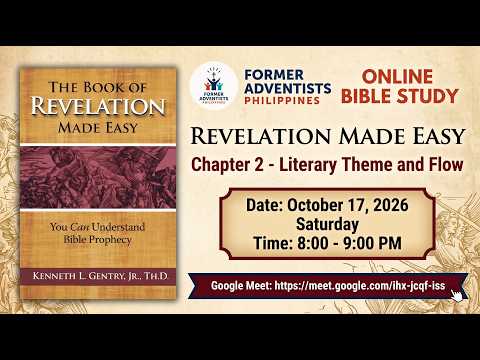
Video & English Outline: Revelation Made Easy: Chapter 2 - Literary Theme and Flow

Former Adventists Philippines Prophecy Bible Study Guide Revelation Made Easy: Chapter 2 - Literary Theme and Flow (October 17, 2026, Saturd...

MOST POPULAR POSTS